Gunite or Shotcrete? An Honest Look at Both for a Pool Shell
Gunite and shotcrete get talked about like rival materials. They're two ways to spray the same concrete — and both live or die on the steel underneath them.
This is one of the most argued-about questions in pool construction, and it gets argued about in a way that hides the answer. Gunite and shotcrete are not competing materials. They are two ways of delivering the same material — sprayed concrete — and the process changes how the concrete is mixed far more than it changes what the shell can be.
I'm the rodbuster, not the shooter, so I have a specific seat in this argument: my work is the steel that either process has to wrap. Here is a straight comparison of both, and then the part that actually decides whether a shell lasts.
First, the terminology, because it confuses everybody
Shotcrete is the proper umbrella term for pneumatically placed concrete, and it's the term the industry standard — ACI 506 — uses for both processes. Gunite is the older, colloquial name for the dry-mix version specifically, and in the pool trade it's still the word most people use. So when someone says gunite versus shotcrete, what they almost always mean is dry-mix versus wet-mix. That's the real comparison.
Two ways to spray concrete
In the dry-mix process — gunite, in pool language — cement and aggregate travel through the hose dry, and water is added at the nozzle as the material is shot. The material arrives at the surface already moving fast and gets its water in the last few feet.
In the wet-mix process — shotcrete, properly speaking — the concrete is batched wet at the plant, delivered, pumped through the hose as a mixed material, and compressed air is injected at the nozzle to accelerate it onto the surface. The mix is designed before it ever reaches the job.
Gunite (dry-mix): the pros
- Very little water in the placed material, because water is added at the nozzle rather than carried through the hose.
- Excellent for irregular shapes and tight areas, which suits custom pool shells with complex geometry.
- Well suited to smaller and more varied work where a batching plant and full delivery setup would be awkward.
- In the hands of a strong nozzleman, produces a dense, well-bonded shell.
- Less mix-design and delivery infrastructure to coordinate for a single residential shell.
Gunite (dry-mix): the cons
- The mix is only as good as the nozzleman's hand, because the water being added at the nozzle is controlled by the operator, not measured at batching.
- Dustier to place, which affects the site and the crew.
- Tends to produce more rebound — material that bounces off rather than staying in place — so more waste and more clean-up.
- Lower production rate, which matters on larger shells and commercial work.
- Admixtures and fibers are harder to incorporate consistently, since the dry mix goes through the hose ahead of the water.

Shotcrete (wet-mix): the pros
- The mix is designed and batched before it arrives, so the water-to-cement ratio is controlled at the plant instead of at the nozzle.
- Consistent from load to load, which makes the shell's material properties more predictable.
- Higher production rates, which suits larger shells and commercial pools.
- Less dust and cleaner placement.
- Admixtures and fibers can be incorporated at the plant as part of the mix design.
- The mix can be sampled and measured before placement, so the quality control is testable rather than visual.
Shotcrete (wet-mix): the cons
- Requires a batching plant and delivery, so small, tight, or remote jobs are harder to serve.
- More equipment and setup on site — pump, hose runs, and the logistics that go with them.
- The mix carries more water than dry-mix placement, so the mix design and curing matter for shrinkage and permeability. Handled well, it isn't a problem. Handled casually, it is.
- Still dependent on the nozzleman for placement, angle, distance, and rebound control. The process reduces one variable, not all of them.
What actually decides whether a shell lasts
Neither method has a monopoly on quality. Both can produce a shell that performs for decades, and both can produce a shell that fails early. The variables that decide it are the same either way: whether the steel was held at the specified cover, whether the cage was rigid and properly tied, whether the nozzleman placed the material at the right angle and distance, how rebound was managed, how the shell was cured, and how the mix was designed in the first place.
So the useful question isn't which process is better in the abstract. It's which process is right for this shell, this site, and the crew that's actually going to place it — and that's a decision for the designer and the builder, informed by the engineer of record. My interest in it is narrower and more practical: whichever process gets specified, the steel has to be something the shooter can wrap.
What either process needs from the steel
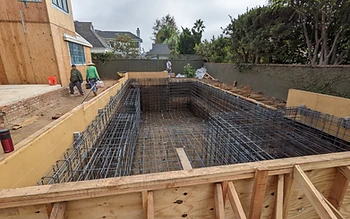
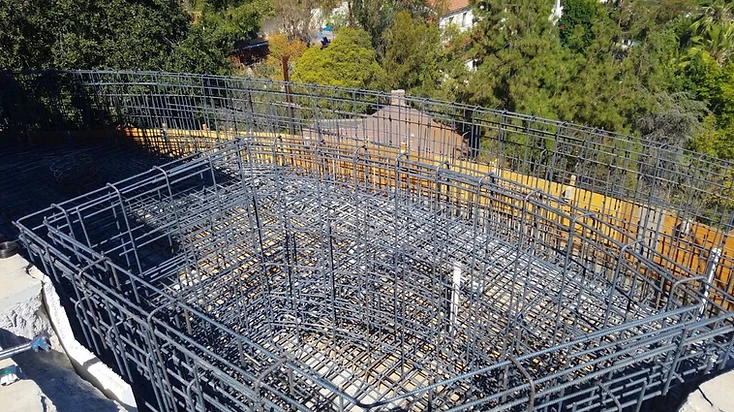
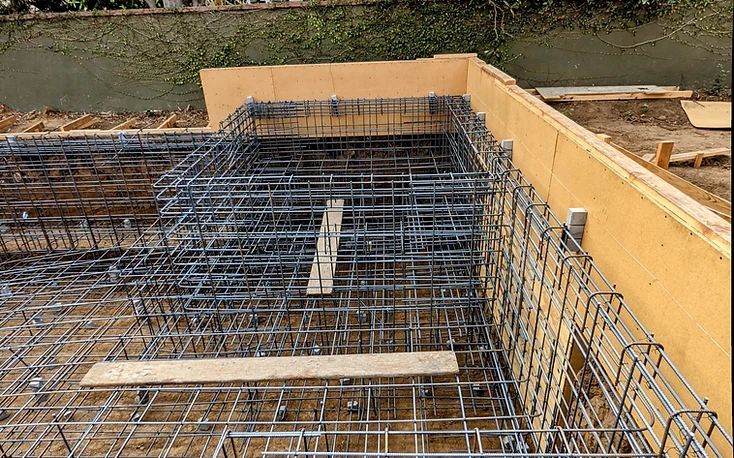
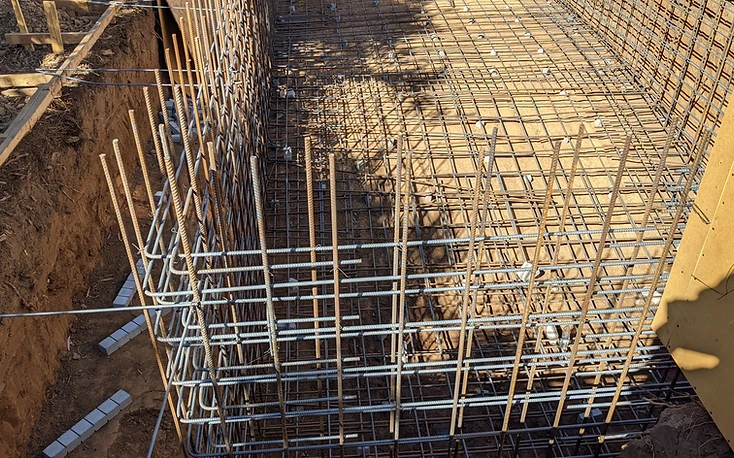
This is where I earn my part of the conversation. Sprayed concrete has to travel around and behind every bar to encapsulate it, and that only happens if the steel is where it's supposed to be and holding still. A cage that shifts under the force of the shoot, or that sits too close to the soil or the form, gives the material nowhere to build the cover that protects the steel.
Rebound is the other part of it. Material bounces off, particularly when it hits a bar at a poor angle or from too far away, and rebound that collects behind reinforcement leaves voids instead of concrete. Consistent spacing and a rigid, correctly tied cage give the nozzleman a fighting chance to encapsulate everything. A cage with drifted bars, loose ties, and missing chairs asks the shooter to work around problems that were already unsolved.

Questions to ask before the shoot, whichever process is used
- Which process is specified — dry-mix or wet-mix — and why it was chosen for this shell.
- Who the nozzleman is, and how much work of this type they've placed.
- How cover is being held, and who verified it before the shoot.
- What the mix design is, and for wet-mix, whether it's being sampled and tested.
- How rebound is being controlled and cleared.
- How the shell will be cured, and for how long.
- Who inspected the steel, and what came back.
Where I fit, and where I don't
I don't shoot concrete, and I don't have a preference to sell you. I install reinforcing steel to the engineer's details, and I hand off a cage that is inspection-ready and rigid enough to take the shoot. If the process changes, my job doesn't: hold the spacing, hold the cover, tie the assembly into one piece, and detail the penetrations properly.
That's the honest version of gunite versus shotcrete. The process belongs to the designer. The steel is the part that decides whether either one has something worth wrapping.
Common questions
Is gunite the same as shotcrete?
Close, but not exactly. Shotcrete is the proper umbrella term for pneumatically placed concrete, covering both processes, and it's the term used by ACI 506. Gunite is the older, colloquial name for the dry-mix process specifically, where cement and aggregate travel through the hose dry and water is added at the nozzle. In the pool trade, gunite versus shotcrete usually means dry-mix versus wet-mix.
Which is stronger, gunite or shotcrete?
Neither has a built-in advantage. Both processes can be specified and placed to meet the same design strength, and both can underperform when they're done carelessly. What actually governs the outcome is the mix design, how the material is placed, whether the steel was held at the correct cover, and how the shell is cured — not which of the two processes was used.
Which process is better for a pool in Pennsylvania?
Either can work here. Our freeze-thaw cycling, saturation, and chlorides from both the pool and winter de-icing mean the shell's durability depends on cover and detailing rather than on the spraying method. The choice of dry-mix or wet-mix should come from the designer and the engineer of record, based on the shell, the site, and the crew placing it — the reinforcement has to be right either way.
Does the shooting method change anything about the rebar?
Yes, in a practical sense. Sprayed concrete has to travel around and behind every bar to encapsulate it, so the cage must be rigid, tied, and held at the specified cover so the material has room to build it. Rebound that collects behind reinforcement leaves voids instead of concrete, which is why consistent spacing and proper chairs and ties matter so much before either process starts.
Why does the pool industry say gunite instead of shotcrete?
Habit and history. Gunite was the name that stuck with the dry-mix process in pool construction long before shotcrete became the standard industry term for both dry-mix and wet-mix placement. When you hear gunite used in a pool conversation, it almost always means the dry-mix process, not a different material.
A second-generation rodbuster carrying a family reinforcing-steel lineage from Southern California to southeastern Pennsylvania. A family reinforcing-steel lineage dating to 1986 — now building in southeastern Pennsylvania.